“Two Jobs” and a Canvas: My Journey through Parental Burnout and Art Therapy
Contributed by Erika Arconti-Galassi ’26 M.A.
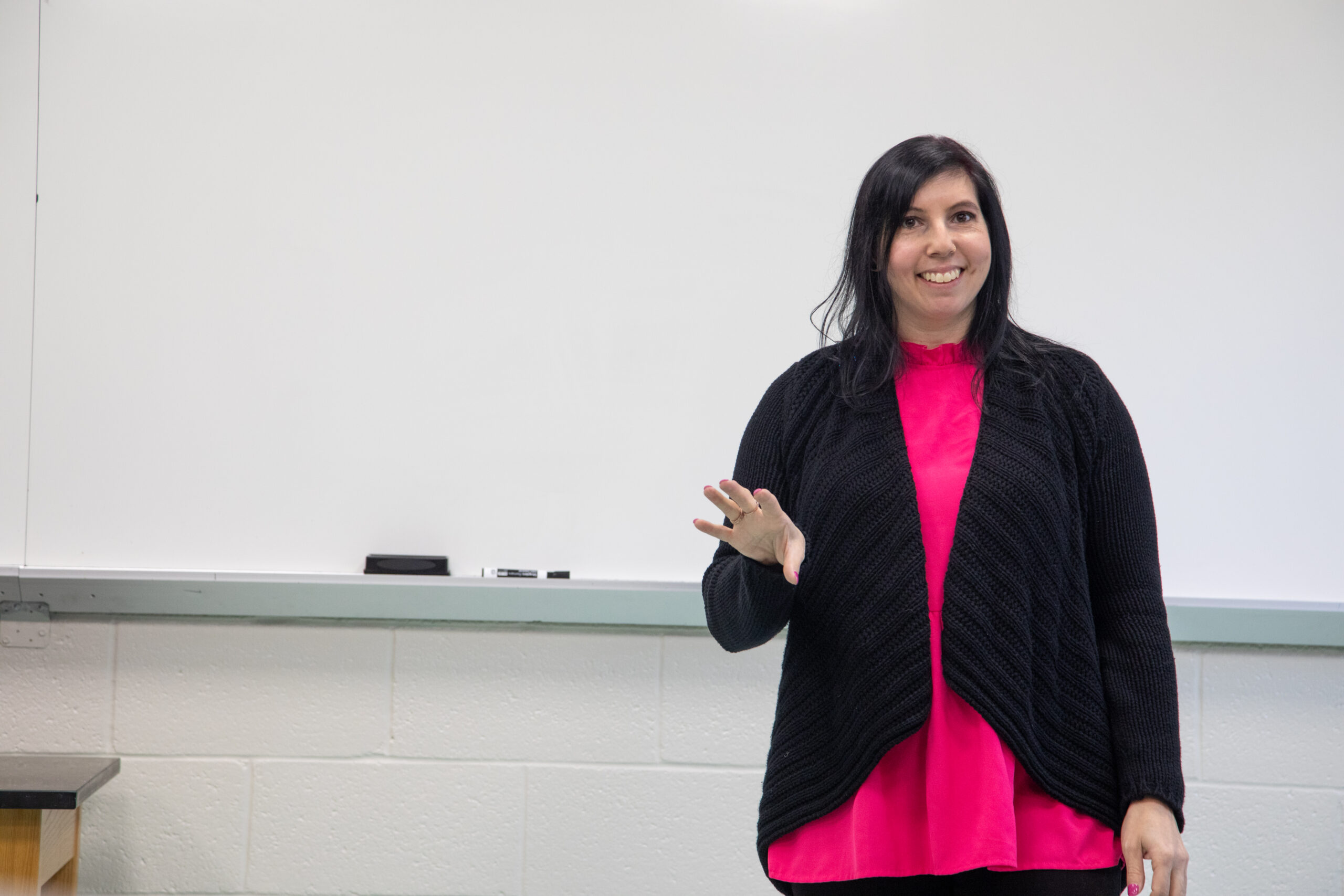
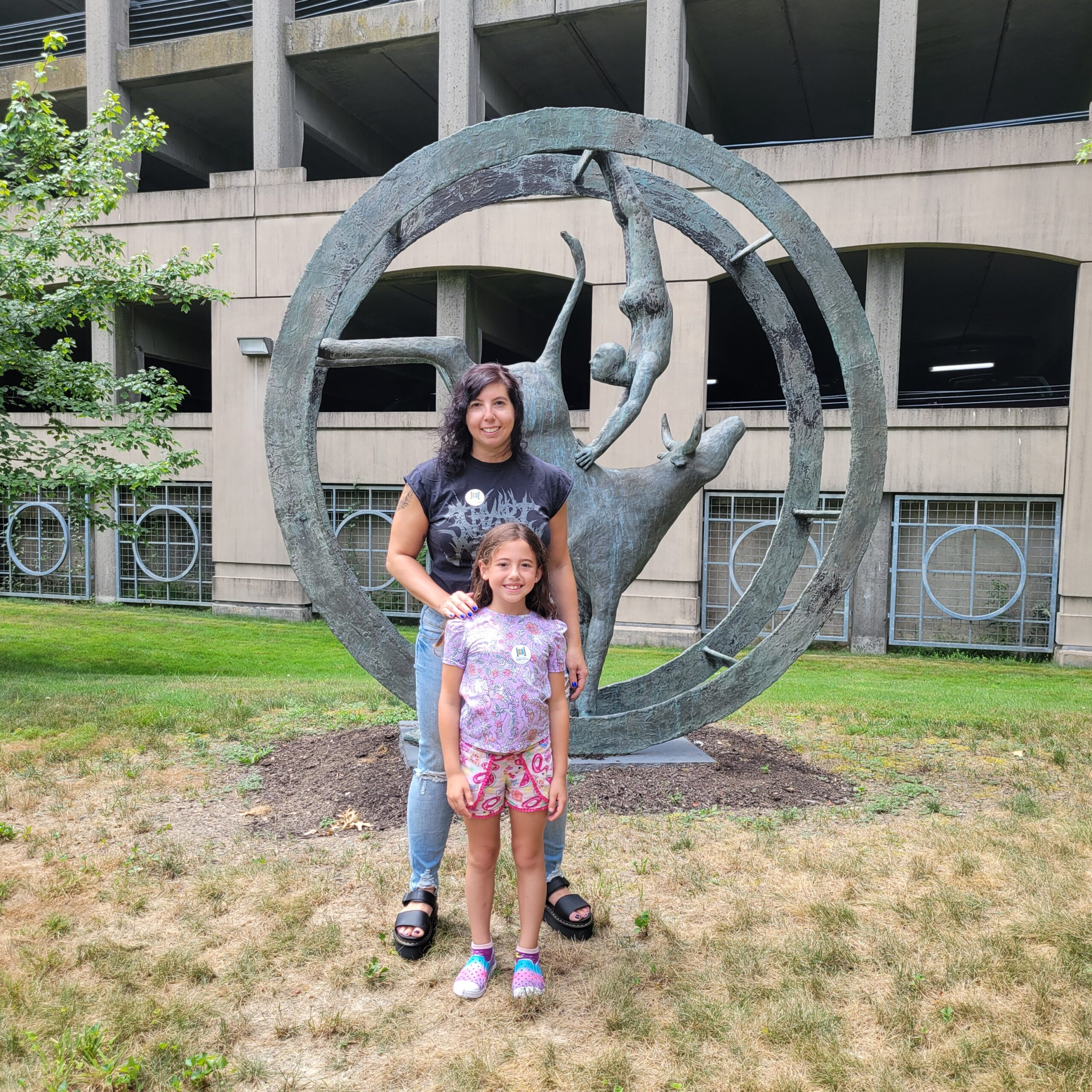
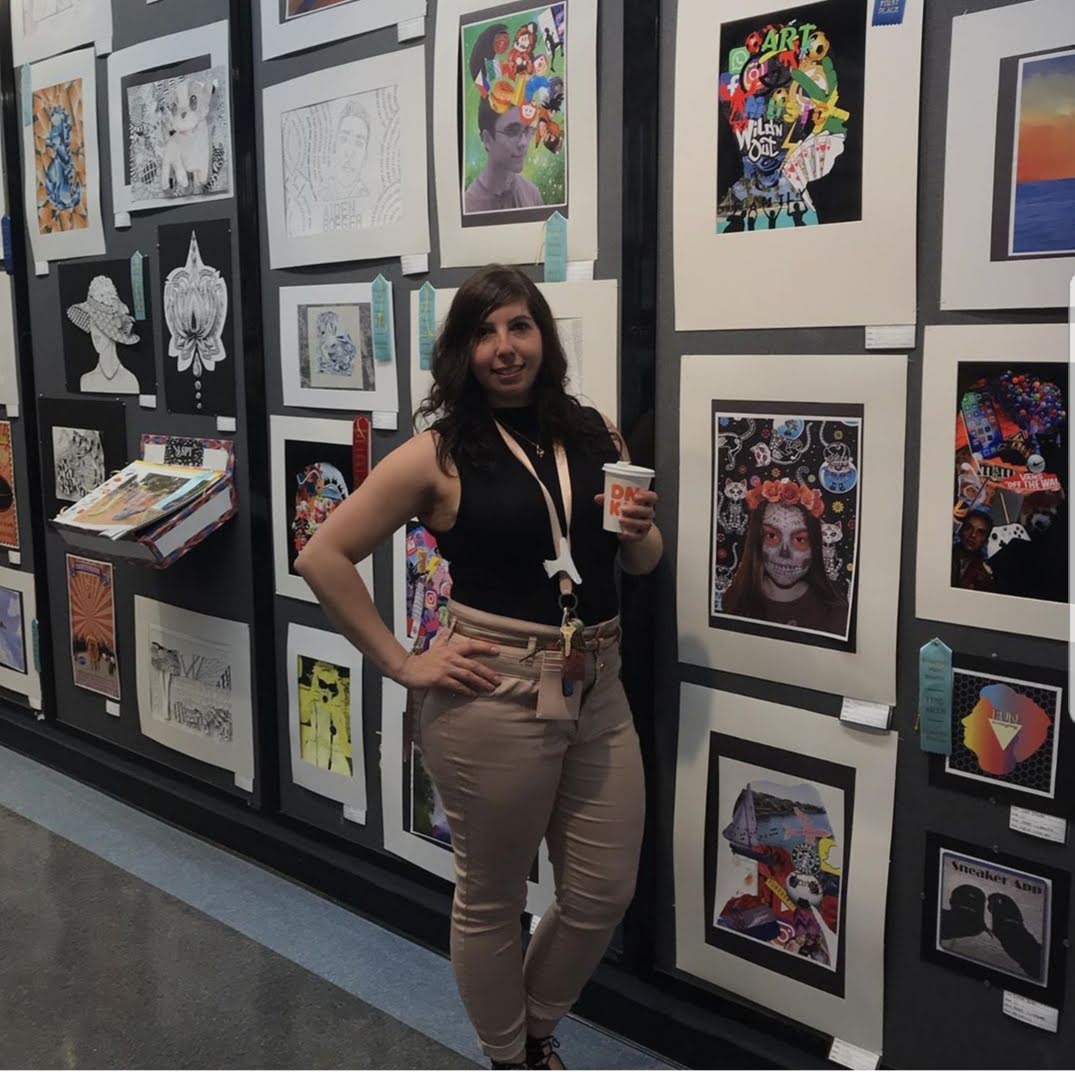
As a four-year hybrid student in the Master of Arts in Art Therapy and Counseling (MAATC) program at Albertus Magnus College, my life often feels like a complex collage. I am a mother to an active 8-year-old daughter, currently a high school arts educator with 18 years of experience, a part-time clinician at Sasco River Center, and a volunteer committee member for Postpartum Support International – CT.
Navigating the “two jobs” of a working mother, the disproportionate burden of care at home alongside relentless career and academic demands, often leads to significant role overload. Balancing these identities requires more than just a calendar; it requires a space for reflection and healing.
Understanding the Burden
My clinical and personal interest in parental burnout, defined by physical and emotional exhaustion and a loss of parental efficacy, led to my recent research. I sought to understand how art therapy could support mothers who, like me, feel the weight of these dual roles.
In my study, I worked with 32 full-time working mothers. At the baseline, the most prominent markers of burnout were extreme exhaustion and feeling “completely run down.” To address this, I utilized the Bridge Drawing directive, an art therapy intervention where participants draw their professional life on one side, their home life on the other, and a bridge connecting them, all while identifying themselves on their bridge.
Insights from the Bridge
The findings were both statistically significant and deeply moving. Quantitatively, burnout scores dropped from a mean of 31.50 to 24.56 after just one 75-minute session.
Qualitatively, the artwork revealed the “hidden” struggles of modern motherhood:
- Central Role Conflict: Ten participants placed themselves in the center of the bridge, feeling “pulled” between demands.
- Home as Secondary Labor: Many depicted the “home” side with a sad or flat affect, suggesting it is a site of labor rather than restoration.
- Persistent Stress: Symbols like “sharks lurking beneath,” “unconnected bridges,” identifying themself jumping off the bridge, or hanging off the bridge represent a deep-seated role of entanglement.
Despite these barriers, the art-making process offered a cathartic shift. It allowed mothers to move from “survival mode” to a state of balanced reflection, with one mother realizing, “I am doing better than I thought.”
The Working Mother, Professional, and Student
Through this journey, I’ve learned that externalizing our stressors through creative expression is vital. As a student and professional, I believe art therapy can help individuals gain the insight necessary for personal growth.
To my fellow working mothers and students: you are navigating a bridge that is often under construction and occasionally swaying. Whether I am in a classroom or a clinical session, my guiding principle remains the same. We must find ways to move from “survival” to “insight.” By acknowledging the weight we carry, we can begin to draw a path toward healing.