
STEM Department Introduces Anatomage Table
Recently, Albertus Magnus College acquired its own Anatomage Table, the most advanced 3D anatomy and medical teaching system based on real human anatomy.
By allowing science majors to revisit what they’ve discovered about the human body, the Anatomage Table expands upon the traditional anatomy experience. Dr. Rosemary Whelan, Professor of Biology and Chemistry Chair at Albertus Magnus, has had the honor of being among the first to interact with the newest addition to the Biology Department.
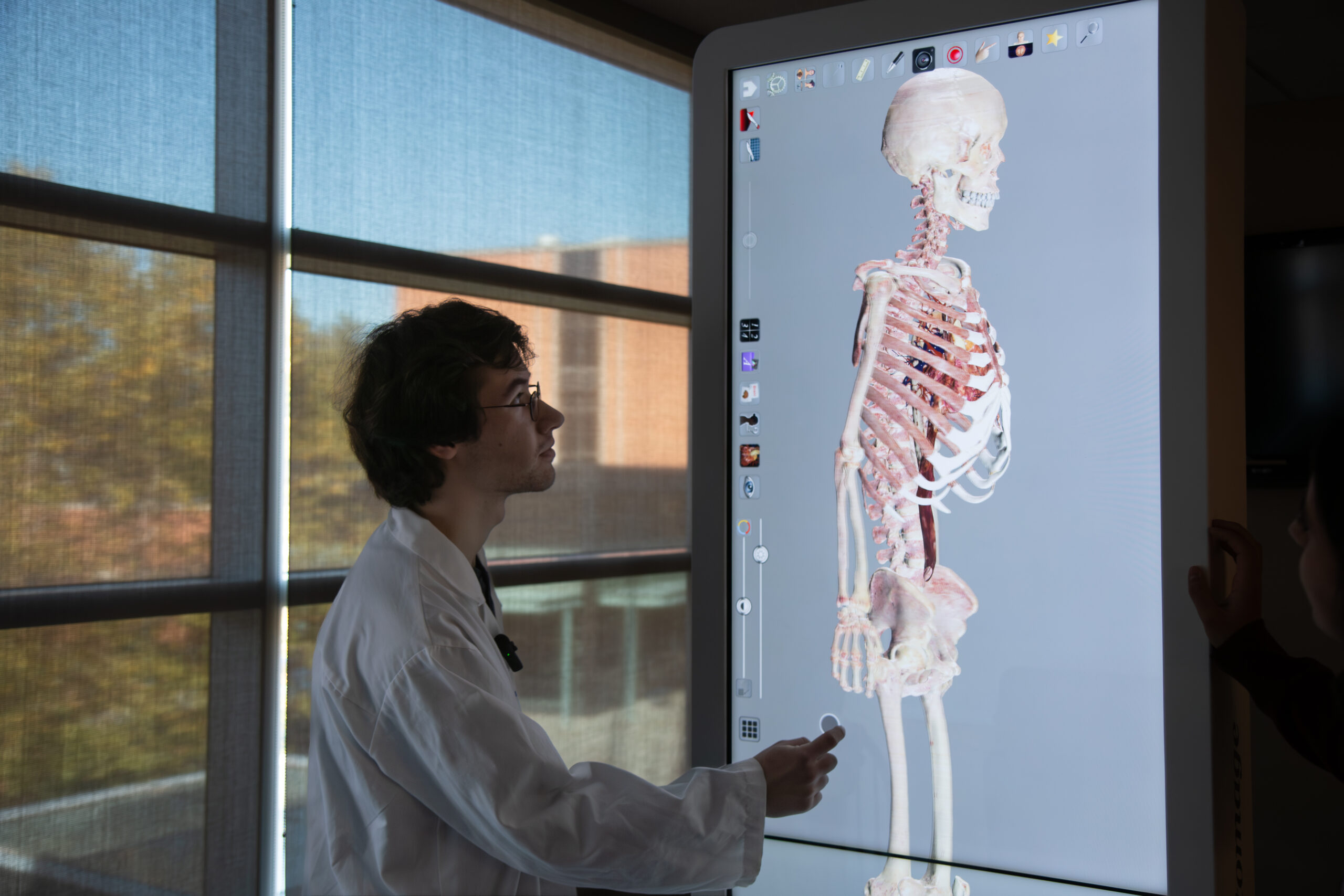
“The Anatomage Table is a life-sized touch-sensitive screen that allows us to look at cadavers, essentially,” she begins. “One-to-one ratio, every level of that cadaver, we can start on the exterior of the body. We can look at the skin and go underneath. We can look at the muscles. We can look at the blood vessels, the nerves, the organs, we can dissect out every single piece of that cadaver.”
As the Nursing Program grew, Albertus began searching for an accessible way to present the human body to its students. The Anatomage Table allows students to observe donated bodies without having to interact with a physical cadaver. As Dr. Whelan says, “It’s like having five different cadavers, with no smell, with no sort of feeling that you’re dealing with a dead body, that you can use over and over and over again, that you can’t make any mistakes with, that you can practice on.”
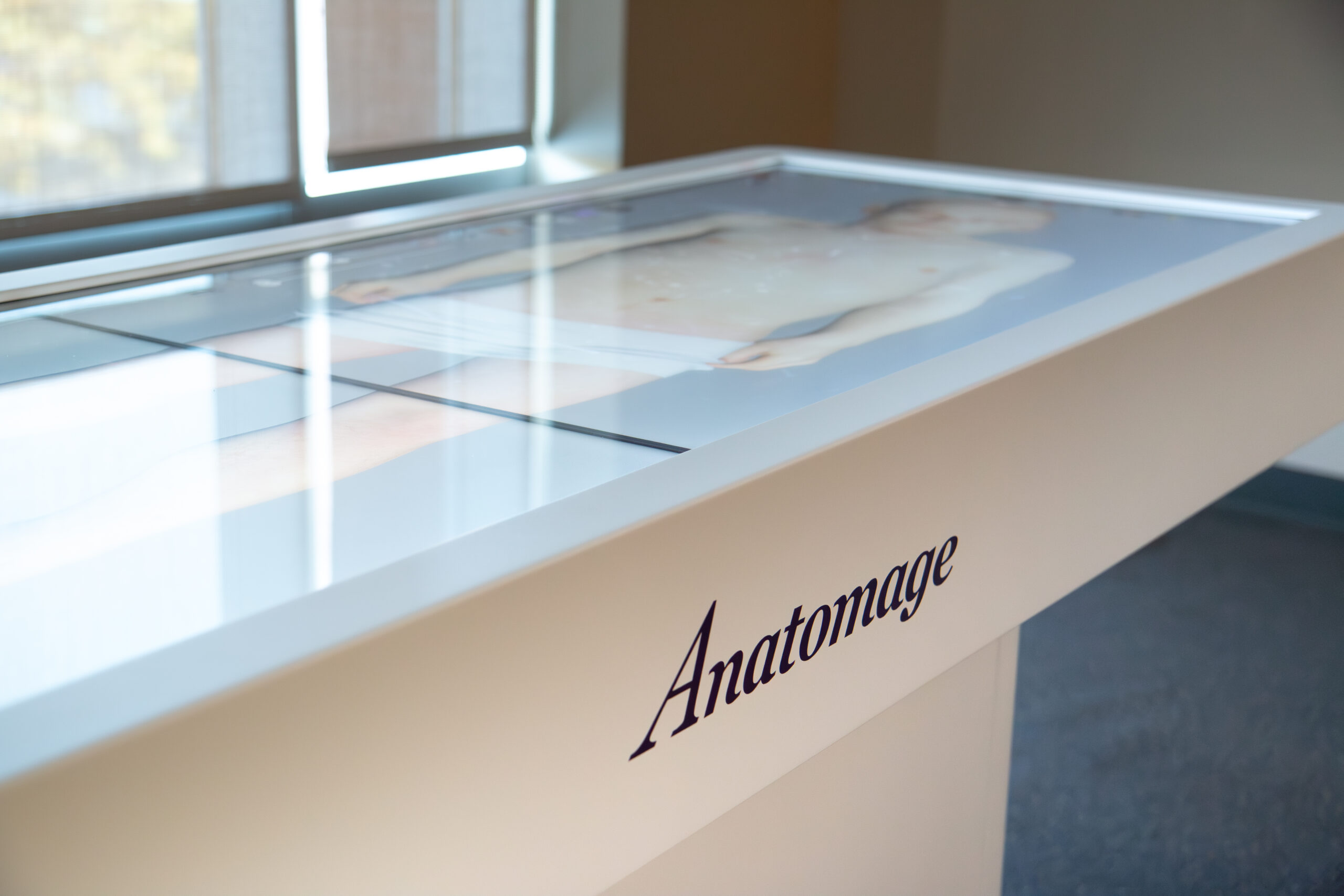
Dr. Whelan has been training instructors, who are often students employed by the school to help their fellow students with laboratory activities. She has been working to familiarize them with the new equipment.
“It is a new, major addition to our pedagogy. And we did get it mid-semester. So we are still working on integrating it into our courses, but so far the major users have been our Anatomy and Physiology Labs.”
Students at all levels can now access human and animal cadaver anatomy dissection thanks to the introduction of the Anatomage Table at Albertus Magnus. The Anatomage Table enhances Albertus’s current programs by enabling nursing students to visualize the injection routes they will administer to patients and develop an understanding of the importance of precision and depth. Anatomy and physiology students will also benefit greatly from viewing real human cadavers.
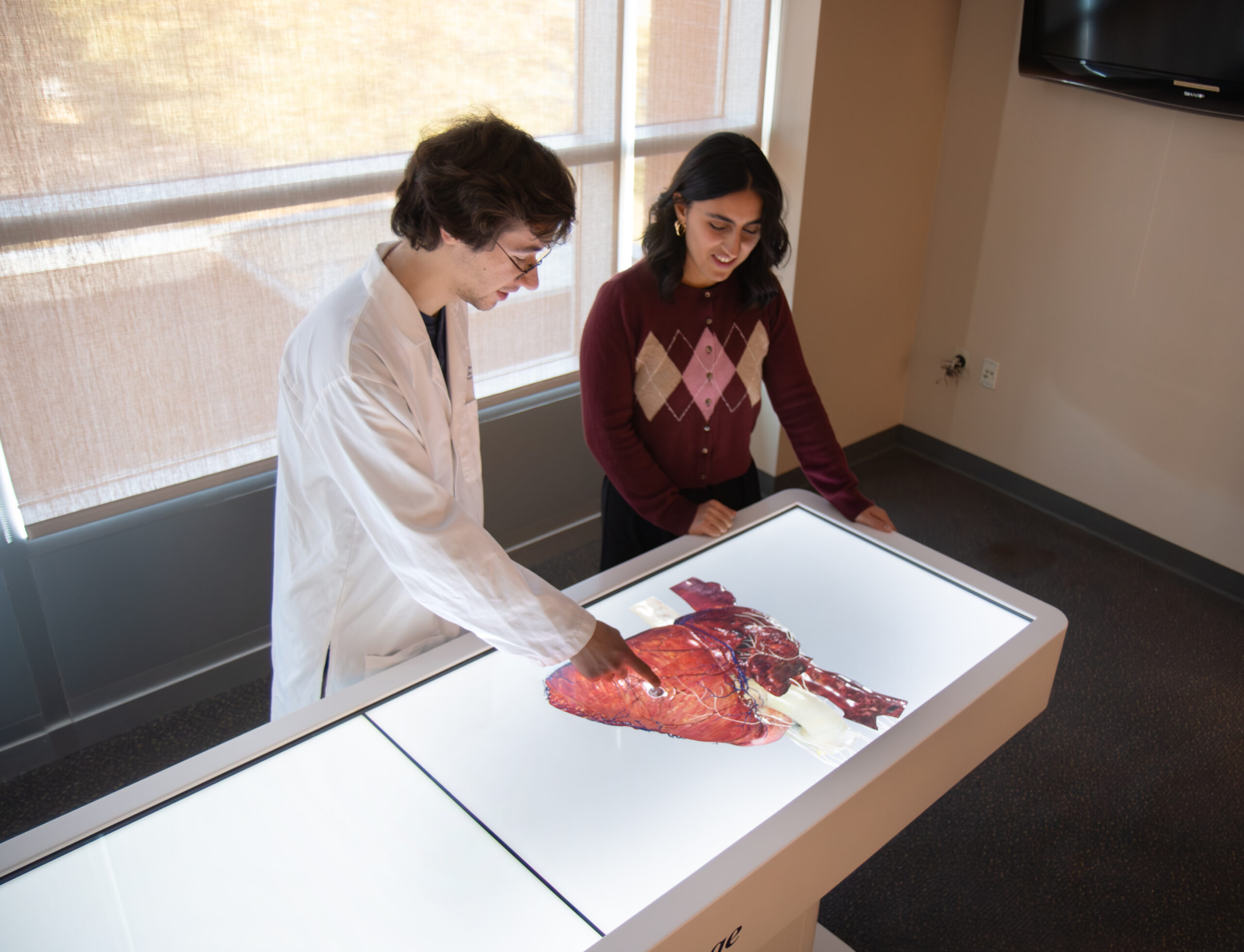
Conner Perry, a student who has worked with the Anatomage Table, gave these closing remarks.
“I strongly think that this Anatomage Table will help science majors at Albertus retain information. Personally, I am a visual learner, and something like this would really help me if I were taking an anatomy course.” Conner said.
“I would like to use this in an event for the Science Club. I want others to be able to use this resource and be as surprised as me when I first used it. I cannot wait to see the possibilities that students are able to achieve from using this specialized equipment.”
Contributed By: Naisha Jackson and Katherine Neilan