Inside the Lab with SAGE Scholars Students
Contributed by: Katherine Neilan, Digital Content Producer & Storyteller
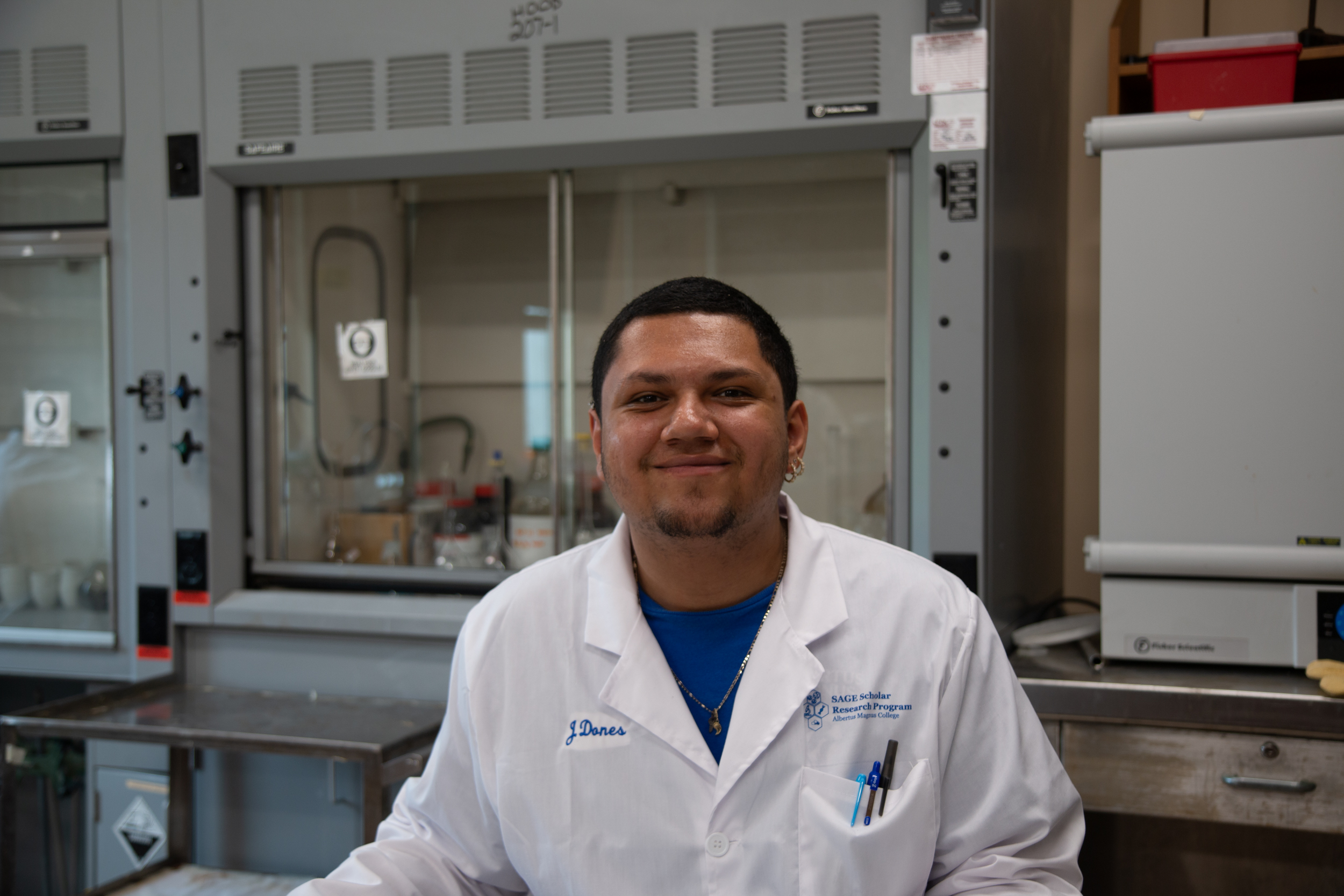
Justin Dones ’29 didn’t expect a three-week research experience to build his confidence the way it did, but SAGE Scholars quickly proved him wrong.
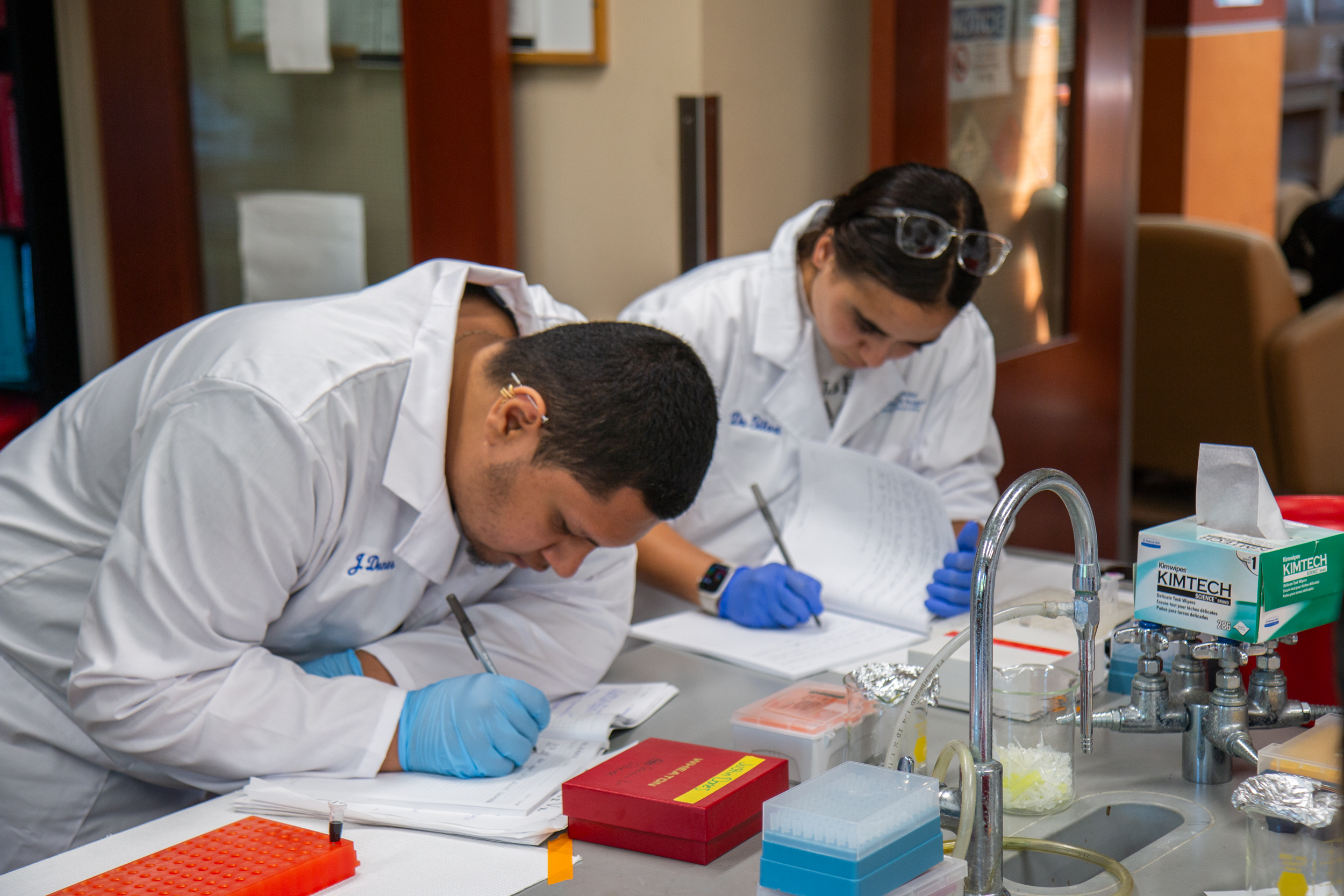
Over a three-week research period, 8 Albertus Magnus College students studied soil samples and bacteria in soil in an effort to discover antibiotic properties that could be used to create new antibiotics.
“I have gained a whole bunch of hands-on experience in a short amount of time and I have learned so much and grown so much from this experience,” Justin said.
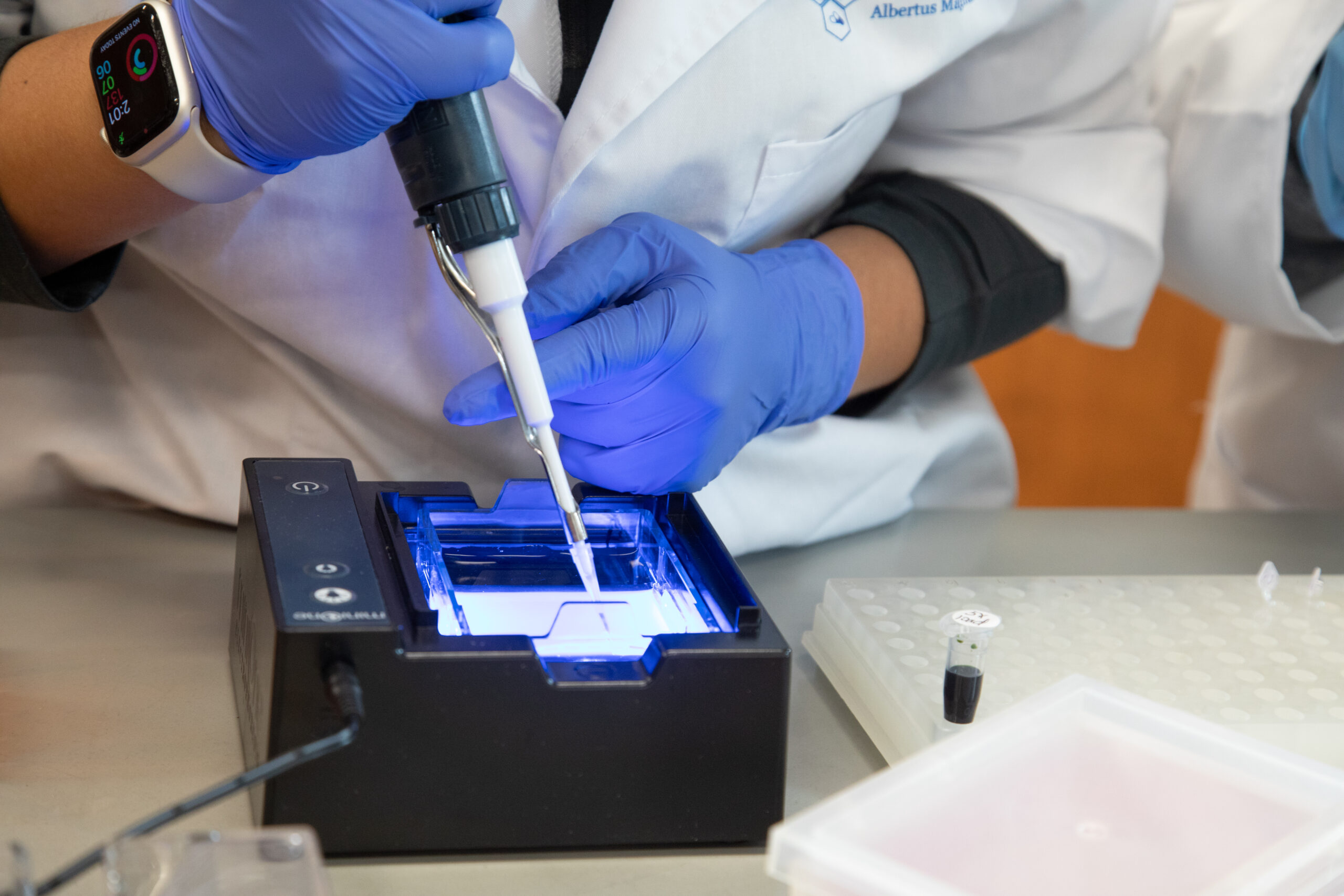
Throughout the program, students gained laboratory skills and techniques ranging from micro pipetting, serial dilutions, using the Polymerase Chain Reaction (PCR), and extracting bacteria’s DNA.
These are core lab skills used across biology and medical research. Micropipetting is used to measure and transfer very small amounts of liquid. Serial dilutions help break samples down so they can be studied more clearly. PCR is used to make many copies of DNA so it can be analyzed. Extracting bacterial DNA allows researchers to study genetic material from bacteria directly.
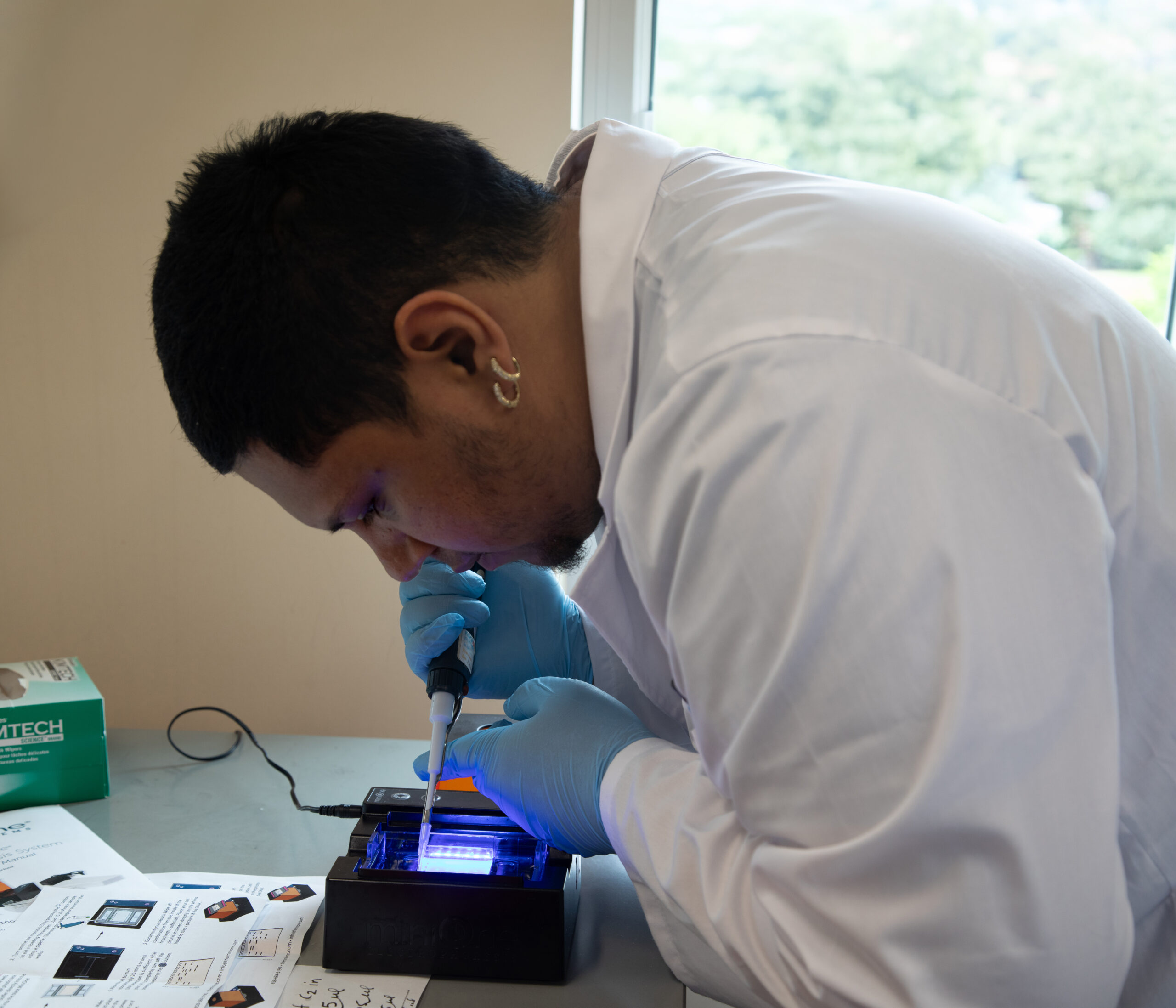
At the beginning of the program, Justin admitted he doubted whether he could succeed, thinking he was not cut out for it due to the large amount of work. It wasn’t until he began breaking it down day by day and tracking his progress that he realized how much he was growing and that he is capable of accomplishing his goals.
“I can really do anything I put my mind to,” he said.
Justin also shared how the program has shaped his academic and career goals. His next step is pursuing an internship with The Connecticut Agricultural Experiment Station (CAES), with long-term interests in studying insects such as ticks, lantern flies, and mosquitoes. Ultimately, he hopes to attend medical school and become a physician.
“SAGE Scholars has opened the doors for us to possibly have internships in other labs,” he said. “It’s a great opportunity to work with other people and work at different paces. Everyone at some point is doing their own thing, which allows us to also work alone.”
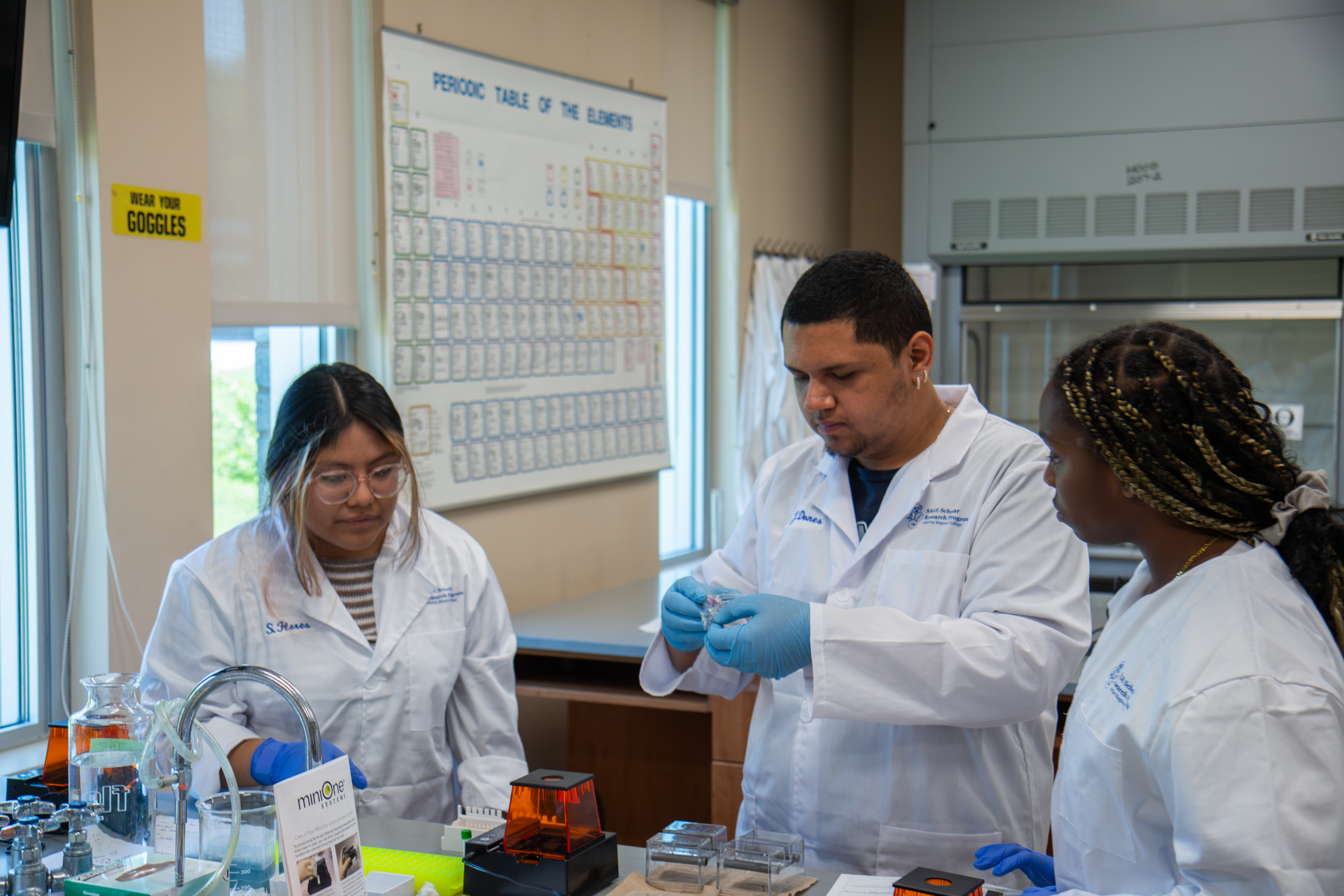
Albertus Magnus College’s SAGE Scholars program provides students with early, intensive research experience in the sciences, preparing them for advanced study and future careers in medicine, research, and related fields.
Now in its fourth cohort, the program has supported students through MSEIP-funded cohorts from 2023 to 2025, with the current 2026 cohort supported through donor funding. Across the program, students engage in hands-on laboratory work, develop technical skills, and gain exposure to real-world scientific research environments.
According to Dr. Rosemary Whelan, Professor of Biology and Chemistry and Chair of the Department of Biology, Chemistry and Mathematics, SAGE Scholars introduces students to authentic research early in their academic careers.
“It gives them a real introduction to research and lets them experience what a real research environment is like,” Dr. Whelan said. “It prepares them for external internships in the science field. We also do field trips to places like CAES and Yale so they can see what it’s like to work in a real research lab.”
The program also creates networking opportunities and pathways toward future internships and research positions.
Dr. Rebecca Brogan-Camille, Professor of Biology, Faculty Advisor, and Coordinator of STEM Research, also helps guide the program alongside Dr. Whelan.