
Albert Week: The Enduring Faith and Legacy of St. Albert
Albert the Great is more than a religious figurehead to the college. This week, we have been celebrating Albert Week, a multifaceted celebration centered on St. Albert and his enduring contributions to philosophy, theology, and science.
Kicking off with the statue’s scarfing on Monday, this week-long event honors not only St. Albert but also the rich legacy he left behind. Begun by Sr. Anne Kilbride, O.P., in 2012, the event features lectures, discussions, and interactive sessions focused on St. Albert’s teachings and their relevance to modern society. Through these activities, the community comes together to reflect on the importance of education, inquiry, and moral integrity, which St. Albert exemplified throughout his life. This annual observance not only fosters a sense of belonging among students but also encourages them to explore the intellectual heritage St. Albert represents. As the week unfolds, participants often engage in heartfelt conversations that reignite their passion for learning and inspire them to embody the virtues St. Albert the Great exemplified.
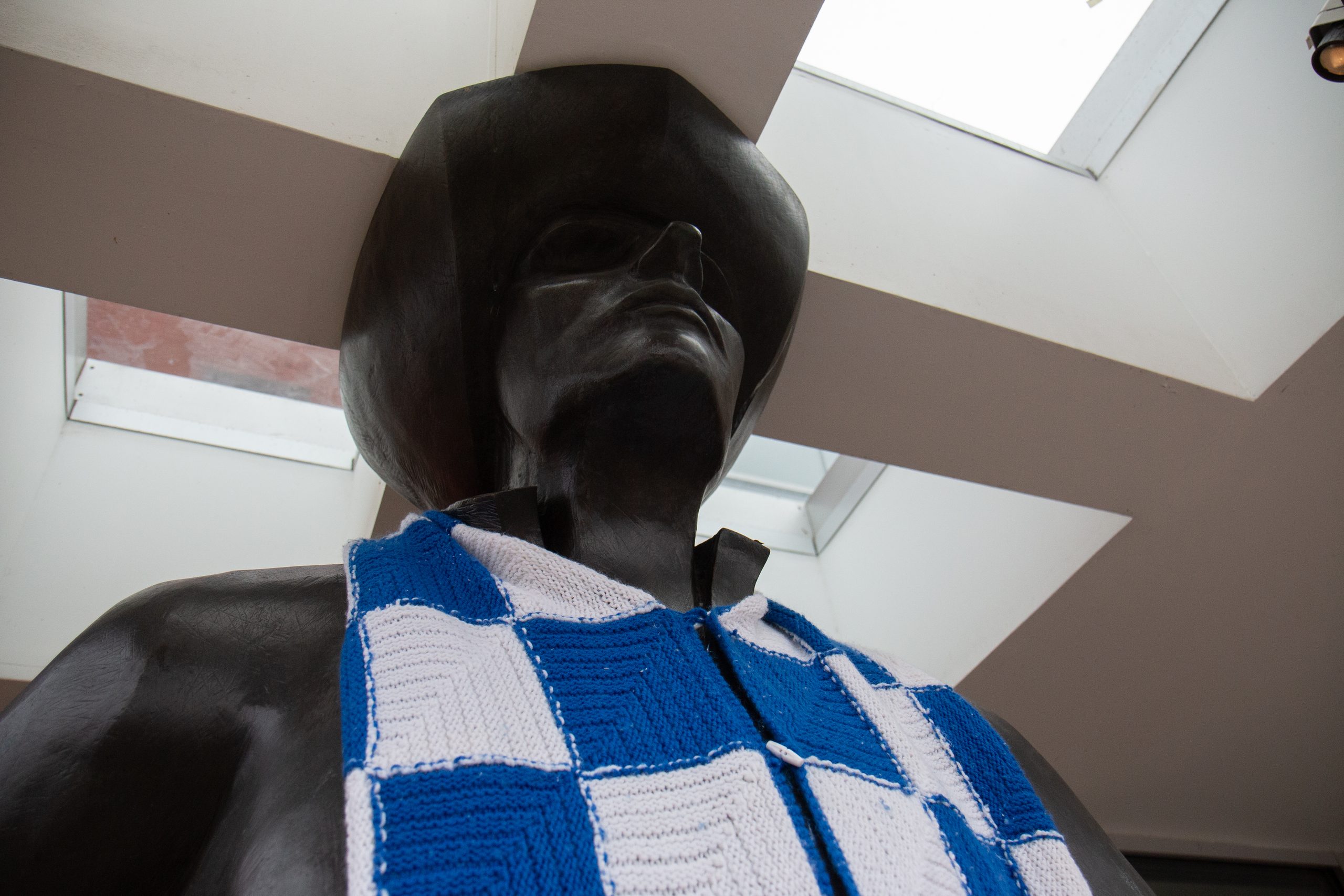
When speaking with Sr. Ellen Coates, O.P., regarding the reason why our college chose to commemorate Albert the Great with the 800-pound bronze statue outside of the Tagliatela Academic Center, she said, “The school was looking for a monumental, impressive statue of a man called ‘Boots the Bishop’ because of two things– Albert was a man of humility rather than a man living with riches and prestige. He also exemplified an image of humility via walking everywhere rather than using a horse because the horse exemplified a status symbol, which would have been a bad image to the people Albert was sent to help.”
And in the book documenting Albertus Magnus College’s history, it says, “Full stride and bible in hand, he is rushing to class himself.”
While the Aquinas Building was not named for anything that Thomas Aquinas accomplished in his lifetime, his connection to Albert was not something to be forgotten about. Thomas Aquinas was an Italian Dominican friar noted for his contributions to theology and philosophy, and in 1245, Thomas was sent to the Faculty of the Arts at the University of Paris, where he most likely met the Dominican scholar Albertus Magnus. There, he first studied under his newfound mentor.
Even when Albert moved to a teaching post in Cologne, Aquinas turned down a post offered by Pope Innocent IV that would have sent him to Monte Cassino, a Benedictine monastery. Albert then appointed Aquinas as magister studentium (master/teacher of students), although Aquinas was reluctant to accept.
On page five of Catie White’s book “Fearless, Endless Truth”, it says, “… Albert the Great was chosen as the college’s name due to Albert’s devotion to study and his extensive teachings of philosophy, logic, metaphysics, psychology, anthropology, the natural sciences, and ethics in universities across Europe during the thirteenth century.”
Veritas is a focal point in Albertus Magnus College. The Dominican Mission is one focused on communicating the truth, be it of the gospel, education, or subjective truth. The college’s mission is to offer education based on the four pillars we follow– study, prayer, community, and service– and to choose St. Albert due to his pursuit of obtaining knowledge about everything possible in his time. The school focuses on Liberal Arts education, which continues Albert’s message to the world.
“For Dominicans, there are some things that are clearly truths, but no one owns the truth. It is important to realize that all of us hold a piece of truth and listen to others respectfully.” Sr. Ellen Coates, O.P., said.
Adding to the mission, the pillars are integral to both Albert and Albertus Magnus College’s identity: Study, Prayer, Community, and Service. Study is red and focuses on the perusal and engagement of truth in all its dimensions. Purple belongs to prayer, which “encourages one to coordinate, organize, and promote opportunities for prayer and contemplation.”
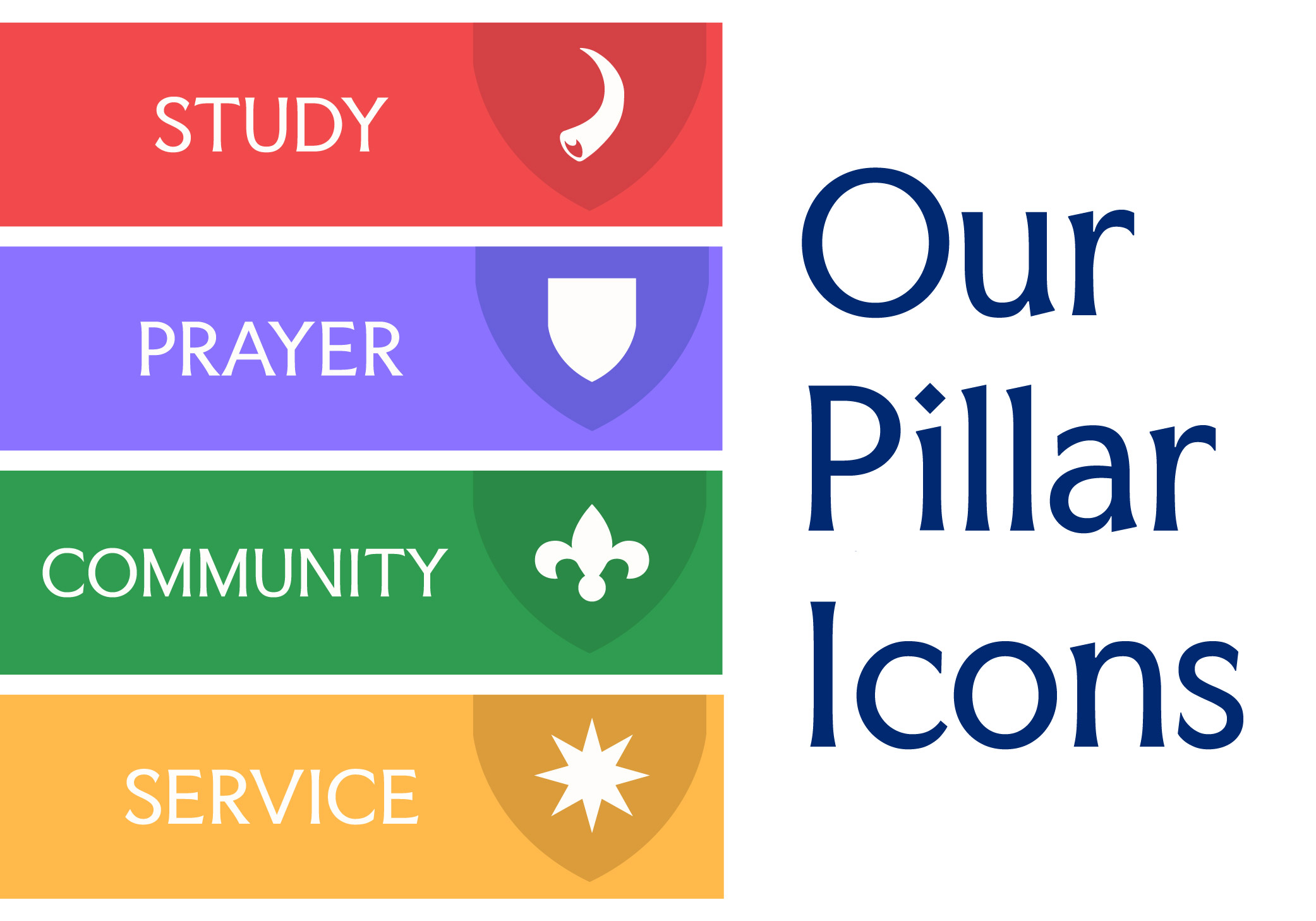
Continuing, community is green, and focuses on the connection between students, faculty, and the world itself. Last, the color yellow represents service, something which Albert the Great was well known to do, and an action the college aims to teach and exemplify to students. (Fearless, Endless Truth, pg. 69)
During Albert Week, we are reminded that St. Albert isn’t just the namesake of our college– he is the blueprint for how we learn, question, and serve. Whether you are working in the lab, debating in the classroom, or stepping out into the New Haven community, you carry forward his relentless pursuit of truth.
Contributed by: Naisha Jackson ’27